
Two guides
A wet room in order: doorway checks, photographs, then the phone
Before the phone comes out, a wet room can be read in order: what the doorway shows, where the wet ends, what to shut off, what to photograph and what to leave alone. Seven steps, each tied to a public source.
Eight lines for the refrigerator door
- DoorwayFind where the water meets outlets, cords or appliances. If they touch, stay at the door.
- CeilingLook up for a bulge or a sag before stepping in.
- EdgePress a dry paper towel in three or four spots and note which parts are wet.
- SourceCheck under sinks, behind the washer and at the water heater.
- ValveShut the supply from dry floor, and skip it if the valve sits in water.
- PhotosWide, then close, with scale in the frame, before anything moves.
- ListWrite each wet room and what covers its floor.
- PhoneCall (678) 658-3988 and read the list aloud.
Look from the doorway before a foot goes in
Find the line where the water stops and the outlets, cords and appliances begin. If they touch, stay at the door. Per the CDC, nobody stands in water to switch power on or off or to hold an electric tool or appliance. Before power returns, an electrician examines the electrical system. A gas smell ends the check: go outside, then phone 911 or Atlanta Gas Light.
Look up as well. FEMA points out that a ceiling can hold trapped water and that floors may be unsafe to walk on. If the ceiling bulges or sags, that room is off limits.
Draw the edge of the wet
Press a dry paper towel on the carpet in three or four spots and note which parts of the room feel wet and which feel dry. On a ceiling stain, outline it in pencil and note the time; a second look later shows whether the stain grew.
Then hunt for the source. UGA Extension's checklist names sinks, tubs, refrigerators, dishwashers and showers, plus the water heater and the lines serving the washing machine, as places where leaks begin.
Close the valve you can reach from dry floor
FEMA's return-home tips list turning off the main electrical power and the water system until they are confirmed safe. The CDC adds that the main power goes off only from a dry spot, and an electrician does it if reaching the switch means wading.
When plumbing is the suspect, EPA WaterSense describes a meter test: read the meter, wait two hours with every tap closed, then read it a second time. A change at all points to a leak.
Take the pictures before anything moves
FEMA's tip is to photograph damaged items before cleaning up. The NAIC adds photos and video of the damage, a written list of everything damaged, receipts for repairs and new purchases, and a prompt report to the insurer. Georgia's Insurance Commissioner says to document everything, and to keep to temporary measures until professionals handle the big repairs.
Shoot each room wide, then close, with a tape measure or a shoe in the frame for scale. Include the source, the shutoff valve and anything headed for the curb.
Sort what leaves the room, and in what order
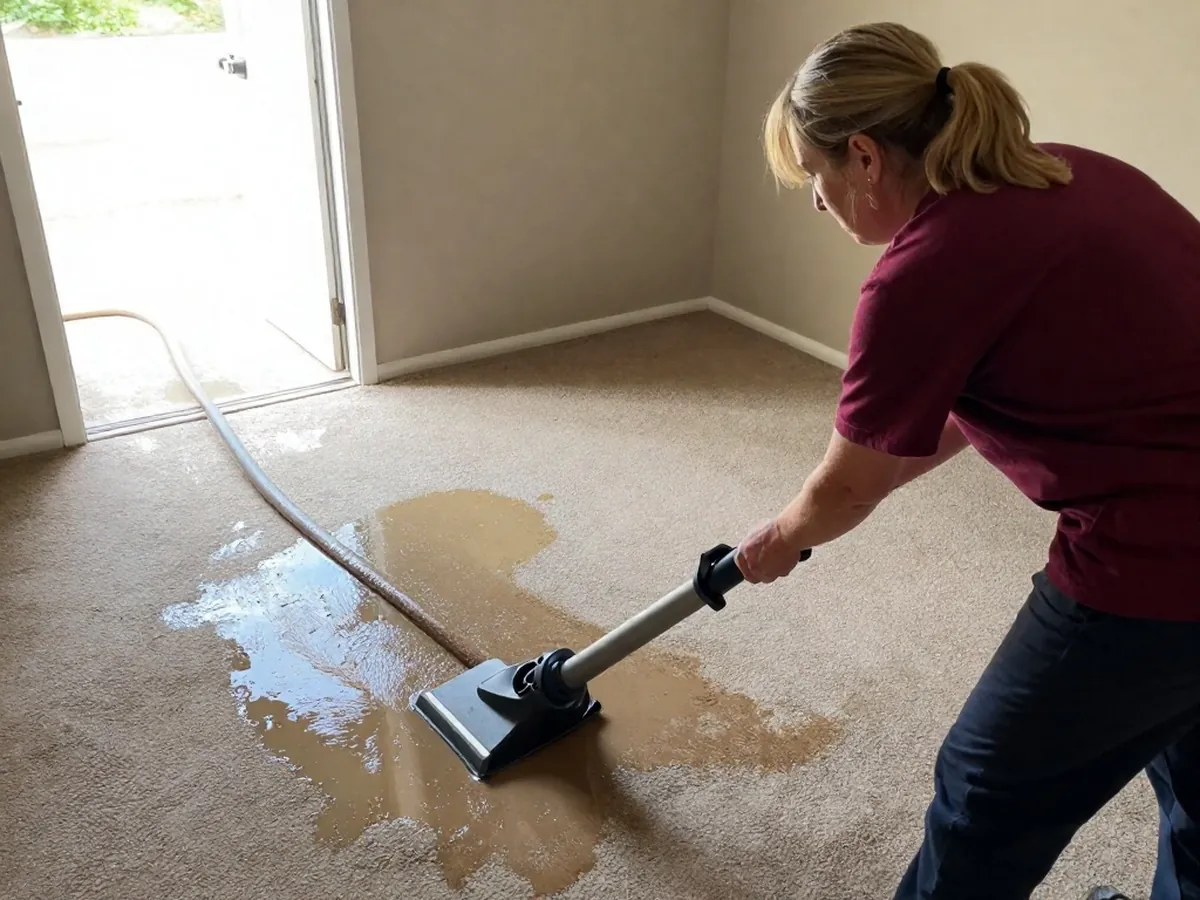
After a flood, Texas A&M AgriLife calls the pad the part that is always thrown out and advises replacing the carpet, with both coming out within 48 hours once the water subsides. Mississippi State Extension says submerged drywall has to be replaced, and Pennsylvania's environmental department says wet insulation can wick water above the flood line. EPA adds that if mold takes hold, porous things like ceiling tiles and carpet may have to go.
Those sources describe flood water. A leak from a clean supply line starts in a different place, and the contractor reads the moisture before anyone decides what goes. Heavy wet carpet is also heavy to lift, so settle the electrical question first.
Fans, the furnace and a closed door
In EPA's mold guide the clock is 24 to 48 hours for drying wet areas and items. EPA also advises against running the heating and cooling system when it is known or suspected to be contaminated, and the CDC wants fans to blow air outward, not inward, after a flood.
A door shut on a wet room only moves the next look to the weekend.
When is the doorway check no longer enough?
Past the doorway, the questions need a moisture reader and a drying plan: water extraction and drying covers the first, and ceiling and wall leaks covers a stain with water behind it.
Call (678) 658-3988 once the room is safe and the notes are written. The contractor can take the address and the wet rooms and talk through a visit.
Jot down the address, the wet rooms and when the water started, then call (678) 658-3988. A rented house means the owner is told first. It covers Canton, Hickory Flat, Free Home, Sixes and Macedonia.
Side notes
- CDC, Safety Guidelines: Reentering Your Flooded Home (updated 24 Aug 2026)
- FEMA, Tips for Safely Returning to a Fire- or Flood-Damaged Home (13 Jul 2024)
- NAIC, What You Need to Know When Filing a Homeowners Claim (20 Apr 2022)
- Georgia Office of Insurance and Safety Fire Commissioner, Insurance Tips After Hurricane Zeta (29 Oct 2020)
- EPA WaterSense, Fix a Leak Week (updated 13 Mar 2026)
- University of Georgia Extension, Mold and Moisture Home Inspection Checklist (Circular 1083, reviewed 1 Mar 2023)
- Texas A&M AgriLife Extension, Cleaning Flood-damaged Homes
- Mississippi State University Extension, Disaster Relief: Home Cleanup and Renovation for Walls (P3837)
- Pennsylvania Department of Environmental Protection, Flood Recovery: Walls (Feb 1996)
- EPA, A Brief Guide to Mold, Moisture and Your Home (updated 18 Feb 2026)
- EPA, Mold Cleanup in Your Home (updated 4 Jun 2026)
- Atlanta Gas Light, Emergency Information
Checked 1 Nov 2026